NOTE! This site uses cookies and similar technologies.

If you not change browser settings, you agree to it. Learn more

I understand

Last posts

  • Servizio momentaneamente non disponibile. Leggi i post qui.

Plan Your VisitChildbirth and Childbearing among the Friulian Peasantry Museums without BordersTraces. Ancient landscape in FriuliMonuments and Public ArchitectureSacred architectureThe architect’s housesThe Udine Regional Exhibition of 1903D’Aronco in TurkeyBiography of Raimondo D'AroncoRaimondo D'Aronco_IntroGino Valle. Profession as Continuous ExperimentationLa conoscenza dei nostri monti (Knowledge of Our Mountains)Come un racconto (As a Story)Mind the Gap 2025Trasformazioni. TriesteAntonio Bardino. Il respiro delle piante (Plants' Breath)MIMMO JODICE. THE ENIGMA OF LIGHTEaster Monday at MuseumsMondo Mizuki, Mondo YokaiCastle Lift scheduled closure Thursday 29 May 2025QUI/ALTROVE. Migrazioni d’oggi in Friuli (HERE/ELSEWHERE: Today's Migrations in Friuli)2 June 2025 - Republic Day - Free Admission in All Civic Museums of UdineSilvia Infranco. Trame organicheExhibition in Casa della Confraternita (Free Admission) July - August 2025UEFA Super Cup 2025 - Free and Reduced Tickets to Visit the Civic Museums of UdineImpressionism and Modernism. Monet, Van Gogh, Picasso, Kandinsky, Magritte. Masterpieces from the Kunst Museum WinterthurExhibition in Casa della Confraternita (Free Admission) September 2025Exhibition in Casa della Confraternita (Free Admission) September - October 2025Exhibition in Casa della Confraternita (Free Admission) December 2025OUTSIDERS - THE URBAN-ART PARADOXBuon Compleanno Pimpa! (Happy Birthday, Pimpa!)Il Presepio e l'espressione artistica della NativitàHolidays 2025-2026 Scheduled ClosuresGuido Guidi. Around here. Photographic Projects for the Friuli Venezia Giulia Region, 1985-2014Guido Guidi. With time, 1956-2024Castle Museums - Itinerary: Partial Closure - Friday 27 February 2026ULDERICA DA POZZO. THE TORN DAYSULDERICA DA POZZO. THE TORN DAYSService announcement MIND THE GAP - From Evidence to Imagination1866 - 2026. Restorations to Rediscover the Art of FreedomFriuli Venezia Giulia Cup 2026 - Free and Reduce Entry Tickets to the Civic MuseumsTEMPORARY CLOSURE OF CASA CAVAZZINIThe Illustrious Guest - Giambattista Tiepolo's Last JudgmentOn the Threshold. Symbols and Rituals of Death in Friuli through the Photographs of Carlo Innocenti A culture of prevention for cultural heritage: from planning to emergency management, Udine, 16 – 17 October 2026Udine ContemporaneaNew York Superstars - Basquiat, Clemente, Haring, Warhol

The Illustrious Guest
Giambattista Tiepolo's ‘Last Judgment’
Udine Castle, Aldo Rizzi Room, Gallery of Ancient Art (Galleria d’Arte Antica)

October 10, 2026 – January 17, 2027
Tuesday – Sunday, 10:00 AM – 6:00 PM
(last entry at 5:30 PM)

Inauguration on the 9th of October, 2026, at 17:00 at the Lapidario of Udine Castle

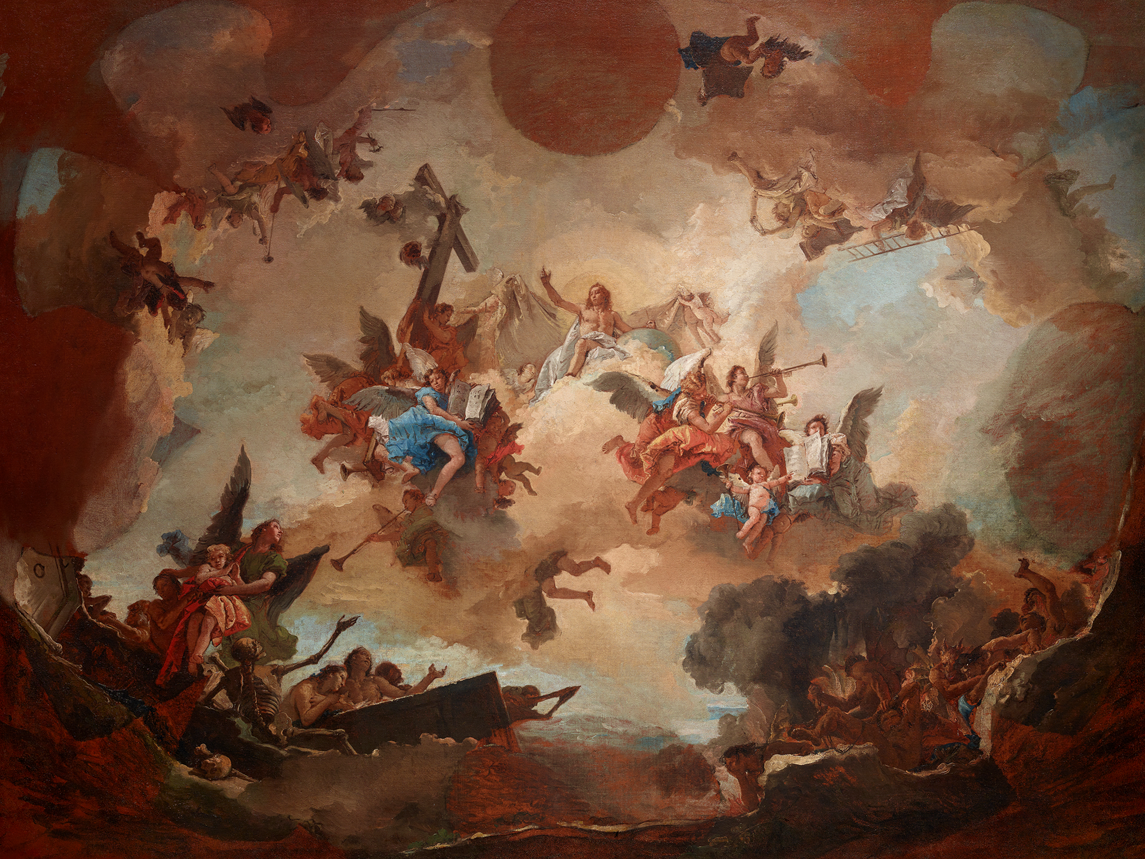
Thanks to an art exchange between the Municipality of Udine and Intesa San Paolo Group, Giambattista Tiepolo's The Last Judgment temporarily joins the civic collections. The arrival of the masterpiece gives rise to the micro-exhibition “The Illustrious Guest: Giambattista Tiepolo's Last Judgment”, curated by Fabio Franz, curator of the Gallery of Ancient Art.
Tiepolo's monumental canvas, datable between 1730 and 1747, will be exhibited in the "Aldo Rizzi" Room of the Gallery of Ancient Art alongside several famous works that the Venetian master created for Udine: Virtue and Nobility Triumphing over Ignorance, Saint Francis de Sales, and The Guardian Angel.
Exhibiting Tiepolo's Last Judgment, alongside these masterpieces preserved at the Civic Museums of Udine, offers an important opportunity to explore the technical, stylistic, and compositional evolution of the Venetian master, particularly during the 1730s and 1740s.
The exhibition is organized by the Civic Museums of Udine under the patronage of the “I Luoghi dei Tiepolo” network, the University of Studies of Udine, and the Fondazione Friuli.

For Info
Email: This email address is being protected from spambots. You need JavaScript enabled to view it.
Tel: +39 0432 1272591

Cover photo: The Last Judgment, Giambattista Tiepolo © Patrimonio Artistico Intesa Sanpaolo, foto Valter Maino, Vicenza


Udine Contemporanea
Udine Castle, Museo Friulano della Fotografia

26 November 2026 – 9 May 2027
Tuesday to Sunday, 10 am – 6 pm
(last admission at 5.30 pm)

Opening and presentation of the catalogue 26 November 2026, 6:00 PM

Udine Contemporanea comes to the Museo Friulano della Fotografia. The exhibition is conceived as a tribute to the city and, at the same time, as an invitation to rediscover it. An experience designed to be enjoyed from within, where Udine is more than just a backdrop: the city becomes part of the artwork, contributes to the vision and reveals a previously unseen side of itself.

Through the lens of photographer Monia Marchionni, the city is taken beyond the boundaries of the ordinary. Its architecture and familiar landmarks become home to unexpected figures, colours, and gestures that transform how we perceive them, blending reality and imagination.

Udine Contemporanea is also an expression of hope. It reflects the wish for the city to become an increasingly welcoming place where people can come together, exchange ideas and build a shared future, while remaining true to its identity and embracing new perspectives.

Udine Contemporanea
Photography exhibition by Monia Marchionni

Where the gaze begins (photo 24), the familiar city takes on a new perspective. Udine lights up with Terrestrial Constellations (photo 01), defies The Gravity of Pink (photo 02) and begins to Blossom Beyond the Visible (photo 03). 

The Muse's Pact (photo 04) transforms Fallen and Wished-for Stars (photo 05) into a Shower of Possibilities (photo 06). 

Amid its architecture, the city experiments with Ways of Disappearing (photo 07) within the Living Matter (photo 08) of a future yet to be imagined. 

Udine brings The Sun Inside (photo 09), traces a new Domestic Orbit (photo 10) and seeks The Measure of the Sky (photo 11), following The Trace of Desire (photo 12). It is a contemporary city, where The Time Between Us (photo 13) makes the Construction of an Elsewhere (photo 14) possible and leads to the place Where Water Learns to Stay (photo 15). 

Here, every body becomes a Form of Freedom (photo 16), every face can Preserve the Gaze (photo 17), while The Sea Out of Place (photo 18) opens up an unexpected path through the city. 

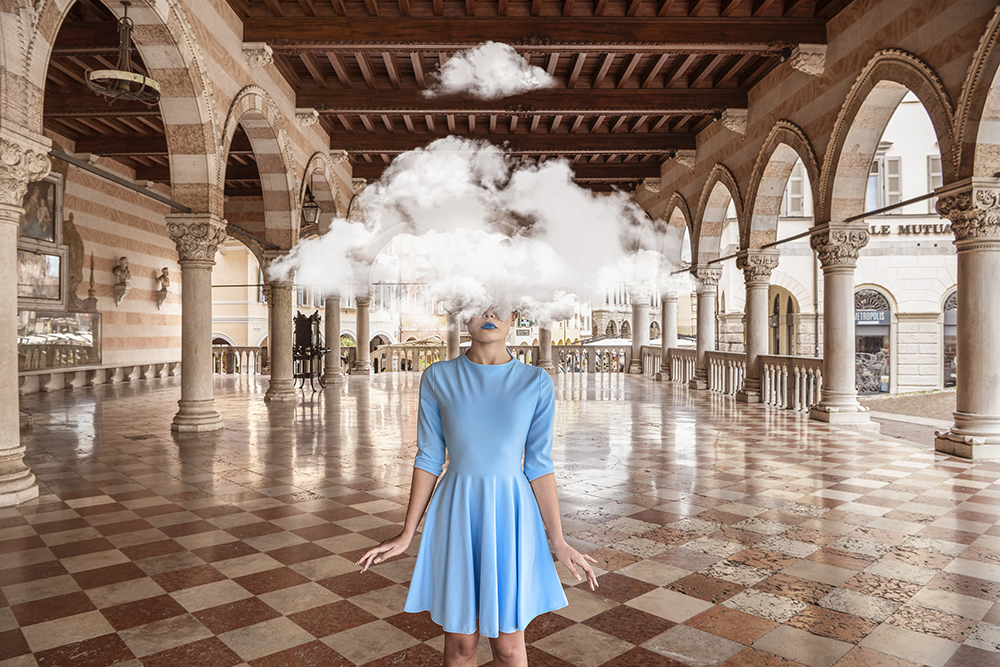
Between The Distance Between Two Silences (photo 19) and The Memory of Clouds (photo 20), Udine gathers Inhabited Stories (photo 21) and dreams Bigger Than Itself (photo 22). 

Because, as Tina teaches us — Words pass through us (photo 23): they never belong solely to the place or time in which they were spoken; they continue their journey and enter the present.


UDINE CONTEMPORANEA
— MONJA ERCOLI

Udine Contemporanea takes shape when our gaze shifts and an unexpected side of a familiar city is revealed. It is in this delicate space, suspended between what exists and what might emerge, that Monia Marchionni's vision takes shape. Colour breathes life into the grey façades of buildings, unexpected figures inhabit their forms, and Udine invites us to imagine it anew: bright, vibrant and open to new possibilities. 

The exhibition was conceived as both a tribute to the city and an invitation to rediscover it. An experience designed to be enjoyed within Udine itself, rather than simply an event brought to the city. Udine becomes part of the artwork, contributes to the vision and reveals a previously unseen side of itself. 

In this way, the solidity of the city's architecture meets the lightness of a cloud, while a suitcase filled with stars accompanies those making their way through the city. Beneath the arcades and along the staircases, the figures seem at once to belong to their surroundings and to have emerged from another world. Their gestures suggest an unexpected possibility: inhabiting reality without abandoning the dream. 

Then our gaze turns downwards and encounters the water. The waterways flow through Udine, their presence subtle, almost secret. Female figures emerge from the water, contemporary muses who seem to spring from their reflections or dissolve back into them. We cannot tell whether they belong to the city or to the dreams of those observing it. Amid this uncertainty, the familiar landscape takes on an enchanting quality.

In these images, the human presence plays a crucial role. The figures do more than decorate or simply move through the space: they bring it to life. They create tension, forge connections and transform architecture into a lived experience. Through them, Udine ceases to be merely a city to observe and becomes a city to imagine. 

Each image emerges from the artist's direct encounter with the city of Udine. Visits to the locations inspired ideas, associations and sketches in which the artistic vision began to take shape long before it was captured through the lens. Far from being mere preparatory studies, these are works in their own right: thoughts projected onto photographic paper, suspended between what is already present and what has yet to take shape. 

It is the beginning of a journey that is both imaginary and deeply rooted in reality.


BIOGRAPHY 

Monia Marchionni is a contemporary visual artist who has chosen photography as her primary means of expression. She lives in the Marche region. 

Her artistic practice draws on the intersection of photography and contemporary art, developing a visual language rooted in staged photography and manual interventions on photographic prints. Through carefully constructed scenes, reality is both preserved and destabilised, becoming a visual expression of thought. 

She graduated from the Accademia di Belle Arti di Bologna in 2005 and went on to obtain a degree in Arts and Humanities, specialising in Contemporary Art History, in 2008. During her studies, she collaborated with Inside Art magazine and the publishing house FMR, gaining exposure to fine-art photography and high- end publishing. After initially working with installation art, she chose photography as her primary medium of artistic exploration. She developed a recognisable artistic language in which people, cities and natural environments become vehicles for storytelling. 

The relationship between places and the people who inhabit them lies at the heart of her artistic practice. Marchionni works at the intersection of documentary and fiction, personal experience and collective memory, real and imagined places. Rather than distancing her work from reality, staging becomes a means of revealing its more intimate and unexpected dimensions. From the meticulous composition of each image and the construction of its staged elements to the choice of a pastel colour palette, nothing is left to chance.

The first significant milestone in her artistic development came in 2014 with Never Again the Fog in the Desert, created in the Atacama Desert in Chile. Subsequent projects include Fermo Visioni Extra Ordinarie (2016–2020), Misfolding (2019–ongoing), Zanj (2023) and Primo Amore (2018–2025), in which photography becomes a means of exploring the relationship between place, memory, identity and imagination. 

Two of her projects have been published as photobooks: Fermo Visioni Extra Ordinarie (2021) and "Primo Amore – Il mare è un sentimento" (2026). 

Marchionni's work has been exhibited in Italy and internationally, including at the 53rd Venice Biennale, Mercati di Traiano – Museo dei Fori Imperiali in Rome, the ARCOS Museum in Benevento, the Tese dell'Arsenale in Venice and the Museo degli Innocenti in Florence. Her work has also been exhibited in London, Tokyo, Dubai, New York and Los Angeles. Her projects have been featured at international photography festivals and events, including MIA Photo Fair, SiFest, Xposure, FORMAT and Belfast Photo Festival. 

She has received recognition through awards and competitions including the Premio Arturo Ghergo – Giovane Talento, Life Framer Awards, Lucie Awards, Siena Awards, FAPA, TIFA and The Independent Photographer. In 2024, she won the Sarajevo Photography Festival and exhibited at the Head On International Photography Festival, at the Italian Cultural Institute in Sydney. In 2025, she received the Special Photographer of the Year distinction at the International Photography Awards (IPA). 

Her photographs have appeared in Fotografiska, Musée Magazine and Il Fotografo, while Sky TG24 and Studio Aperto Magle have featured her work. Alongside her independent artistic practice, she undertakes socially focused photographic projects commissioned by public institutions. She also conducts workshops and seminars at universities and cultural institutions. 

Her work invites us to see familiar places as though we were encountering them for the very first time.
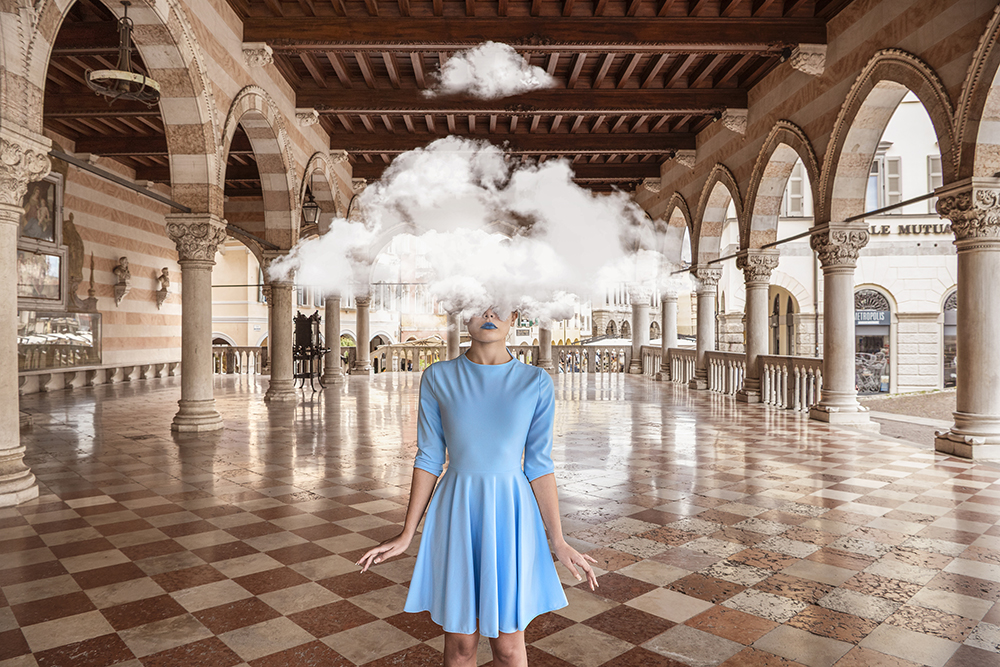
 

Udine Contemporanea La memoria delle nuvole

COME IN CMYKEYCHandCOME IN AEPThe Archaeological Museum is housed on the ground floor of the eastern wing of the castle in a new setting inaugurated in 2013. The current exhibition layout follows a historical itinerary which, thanks in part  to the addition of multimedia aids, highlights the collectionist nature of archaeological research between the late 1800s and early 1900s. The museum is divided into six rooms dedicated to the different interests and activities of Friulian collectors and scholars and displays finds ranging from vases from Magna Graecia, to protohistoric, Roman and early medieval funerary objects. The displays offer a fascinating insight into the minds of the collectors themselves, whose personal and intellectual curiosity was generally more focused on the search for rare and aesthetically pleasing artefacts than on documentary research per se.

servizi Musei

Since 9th November 2017, thanks to the European project COME-IN!, the Archaeological Museum offers a multisensory itinerary together with an inclusive APP presenting an itinerary in Italian for people with visual impairment, and a guided tour in French, English and Italian.

Download the app app store logogoogle play logo 300x104

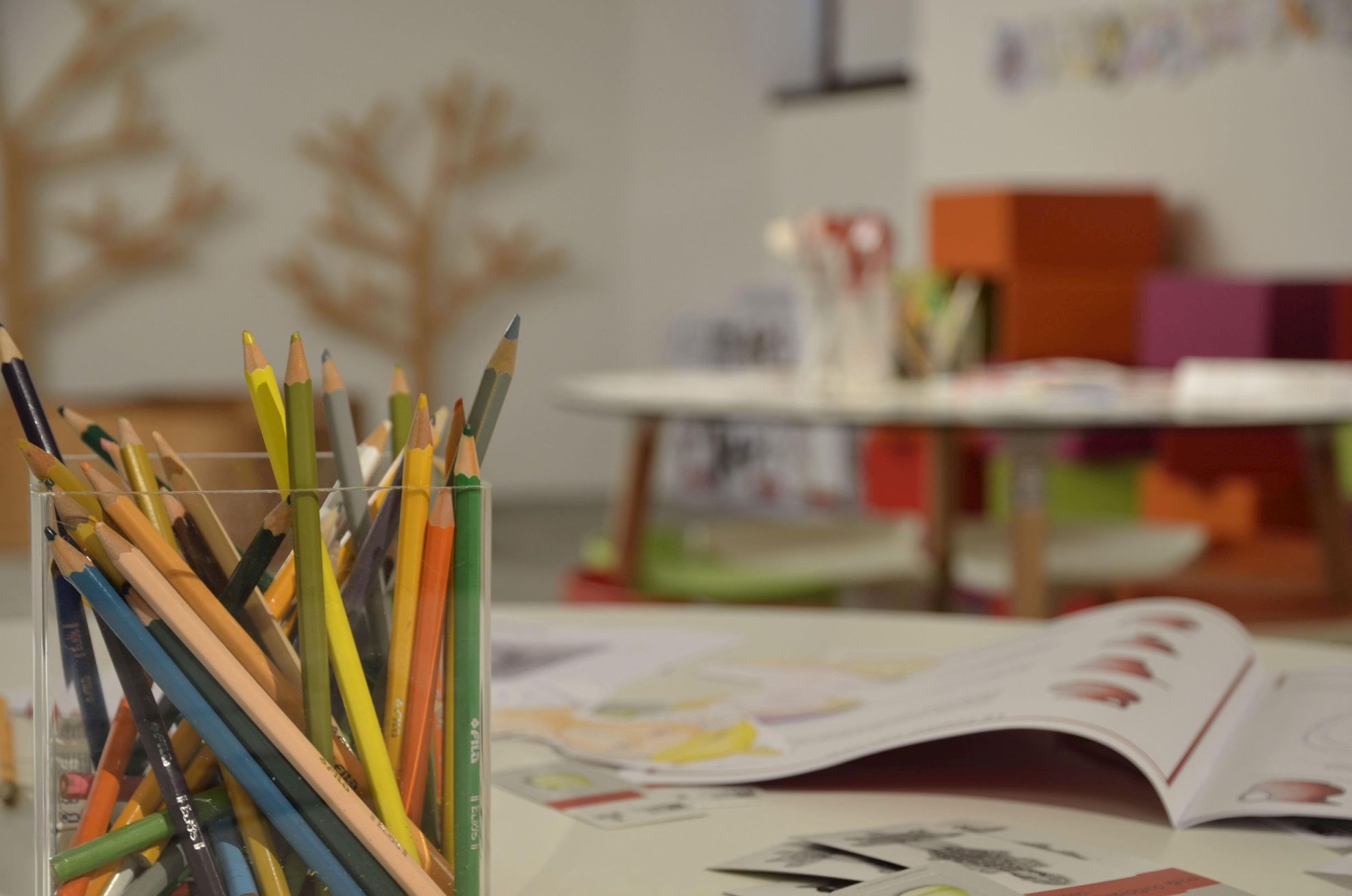
An integral part of the itinerary of the Archaeological Museum is the Playroom (open every Sunday from 15.00 to 17.00), a specially equipped area devoted to games, reading, experimentation, workshops, and child-friendly facilities.

Click here to download all the materials for a visit with your kids!kid2


RESEARCH ARCHIVE

Excavations at the Neolithic and Eneolithic site of Nogaredo al Torre in collaboration with the Friuli Museum of Natural History

The Museo Archeologico di Udine with the collaboration of the Museo Friulano di Storia Naturale is currently conducting officially approved archaeological excavations at the Neolithic and Eneolithic site of Nogaredo al Torre (UD). Research carried in the flood plain has so far revealed a pit and an anthropic layer rich in archaeological finds which are currently the subject of ongoing study.

Migration in prehistoric time

Migration is, and has long been, a key factor in the formation of European society. Indeed, both archaeological and genetic evidence demonstrate that periods of greatest economic change often coincide with the arrival of new peoples. This is what occurred in the Balkans and the Adriatic area 8,000 years ago, when peoples from the Fertile Crescent travelled to these lands and introduced innovations such as livestock farming and agriculture, radically transforming the lives and practices of the communities of hunters and gatherers whom they met on their way.

At present it seems that these migration flows followed two directions: one maritime, along the coasts, and the other more inland. Research into this period was recently initiated by the Museo Archeologico di Udine, which explored the theme in an exhibition Adriatico senza confini. Via di Comunicazione e crocevia di popoli nel 6000 BC (The Adriatic, a sea without borders: communication routes of populations in 6000 BC). In 2018 the Museum will conduct research on vertical migration: transhmance in the Carnic Prealps. 

Fortified settlements from prehistory to the 15th century

From the end of the Neolithic period until the 15th century Friuli was distinguished by the presence of fortified settlements which also characterize the unique morphology of the region. It is an interesting phenomenon and certain aspects emerging from recent research were explored and partially analysed during a meeting held at the Archaeological Museum in 2014 entitled: Difendere il contado: proprietà collettive in montagna. Dalle “cortine” medievali in Carnia alle Regole di Cortina d’Ampezzo (Defending the Contado: collective mountain property from the medieval ‘cortine’ of Carnia to the Regole di Cortina d’Ampezzo).

This initiative will be followed in 2016 by the organization of a conference dedicated to fortified settlements in mountain areas from prehistoric times to the 15th century.


MUSEUM ACCASSIBILITY

Since 2014, the Archaeological Museum of Udine has been pursuing equal opportunities in culture policy aimed at improving access to exhibitions and other cultural events in the city. To launch the new policy, which was introduced in June 2014, the museum organised a seminar entitled “Museums without barriers” in collaboration with the Laboratorio dell’Accessibilità Universale at the University of Siena, which organises workshops on accessibility. The seminar was open to educators, and all employees and professionals who, by virtue of their work with people with disabilities and special needs, frequently encounter museum accessibility issues.

Following on from the seminar, the Museo Archeologico began to explore ways of addressing certain accessibility issues through an exhibition entitled Adriatico senza confini. Via di comunicazione e crocevia di popoli nel 6000 BC (The Adriatic, a sea without borders: communication routes of populations in 6000 BC). Building on this experience, the Museum staged another exhibition in 2015 entitled Mense e banchetti nella Udine rinascimentale (Meals and Banquets in Renaissance Udine).


COME IN CMYKThe Museum is currently working with 14 other partners from Italy, Poland, Germany, Austria, Croatia, Slovenia on a European project entitled COME-IN! (Cooperating for Open access to Museums–towards a widEr INclusion) project is funded under the Interreg CENTRAL EUROPE Programme and aim s at valorizing the CENTRAL EUROPE cultural heritage by increasing the capacity of small and medium size museums, making them accessible to a wider public of people with different kinds of disabilities. The Central Europe an Initiative–Executive Secretariat, in its capacity as Lead Partner, coordinates a multifaceted network of 14 Museums, Disability associations, Academic representatives, training institutions and Policy makers from Central Europe area that will contribute to define transnational high level standards and ensure know–how transfer to guarantee accessibility to museums involved in the project. More precisely, guidelines  will be develop to help organizing accessible collections and exhibitions and a training handbook for museum operators will be made available.

Last but not least, an innovative promotional tool, the COME-IN! label will be developed to award museums complying with the established accessibility standards. The label will be promoted on transnational, national and local level to ensure its sustainability and transferability.

The project started on July 1st, 2016 and will last until June 30th, 2019. The budget is 2.724.487,50 euro, with 318,500.00 euros allocated to the Archaeological Museum of Udine, which allowed the Museum to carry out multiple interventions.

For further insight into museum accessibility, please download the proceedings of the COME-IN! thematic conference which took place in Udine on 9thNovember 2017

For more information download COME-IN! newsletter and see the video interviews.


SITE MAP

The Archaeological Museum contains finds uncovered during excavations carried out at Italian and foreign sites. The list is broken down by geographical area and for some of the sites inventory cards are currently on-line.

Udine City Sites

  • Castle hill
  • Piazza Duomo e vecchio duomo
  • Piazza I Maggio
  • Piazza I Maggio
  • Piazza Venerio
  • Planis
  • San Gottardo
  • Via Brenari
  • Via del Gelso
  • Via Pracchiuso
  • Ponte Cormor
  • Vat
  • Via Bariglaria

Sites in Friuli

  • Adegliacco
  • Aiello del Friuli
  • Alnicco
  • Aquileia
  • Buia
  • Carpeneto
  • Castions di Strada
  • Fagagna
  • Gemona
  • Gonars
  • Gradisca di Sedegliano
  • Gradisca sul Cosa
  • Gradiscutta di Varmo
  • Joannis
  • Laguna di Marano
  • Lavariano
  • Lovaria
  • Mereto di Tomba
  • Moruzzo
  • Muzzana del Turgnano
  • Pavia di Udine
  • Pozzuolo del Friuli
  • San Giorgio di Nogaro
  • San Vito di Fagagna
  • Sclaunicco
  • Sevegliano
  • Socchieve
  • Strassoldo
  • Venzone
  • Basiliano
  • Buttrio
  • Cividale
  • Lestizza
  • Porpetto
  • San Daniele
  • San Giovanni di Casarsa (PN)
  • San Giovanni di Polcenigo (PN)
  • Tricesimo
  • Zuglio

Italian Sites

  • Lombardia, Cuggiano (MI)
  • Puglia, Mesagne (BR)
  • Puglia, Taranto
  • Sardegna, Altipiano di Santa Lucia Ales
  • Sardegna, Chiesa di S. Paragovio Noli
  • Sardegna, Nuraghe
  • Sardegna, Ballao
  • Sardegna, Tharros - CA
  • Sicilia, Erice
  • Sicilia, Selinunte

Foreign Sites

  • Egitto
  • Rodi

Itineraries

Room 1.Francesco di Toppo

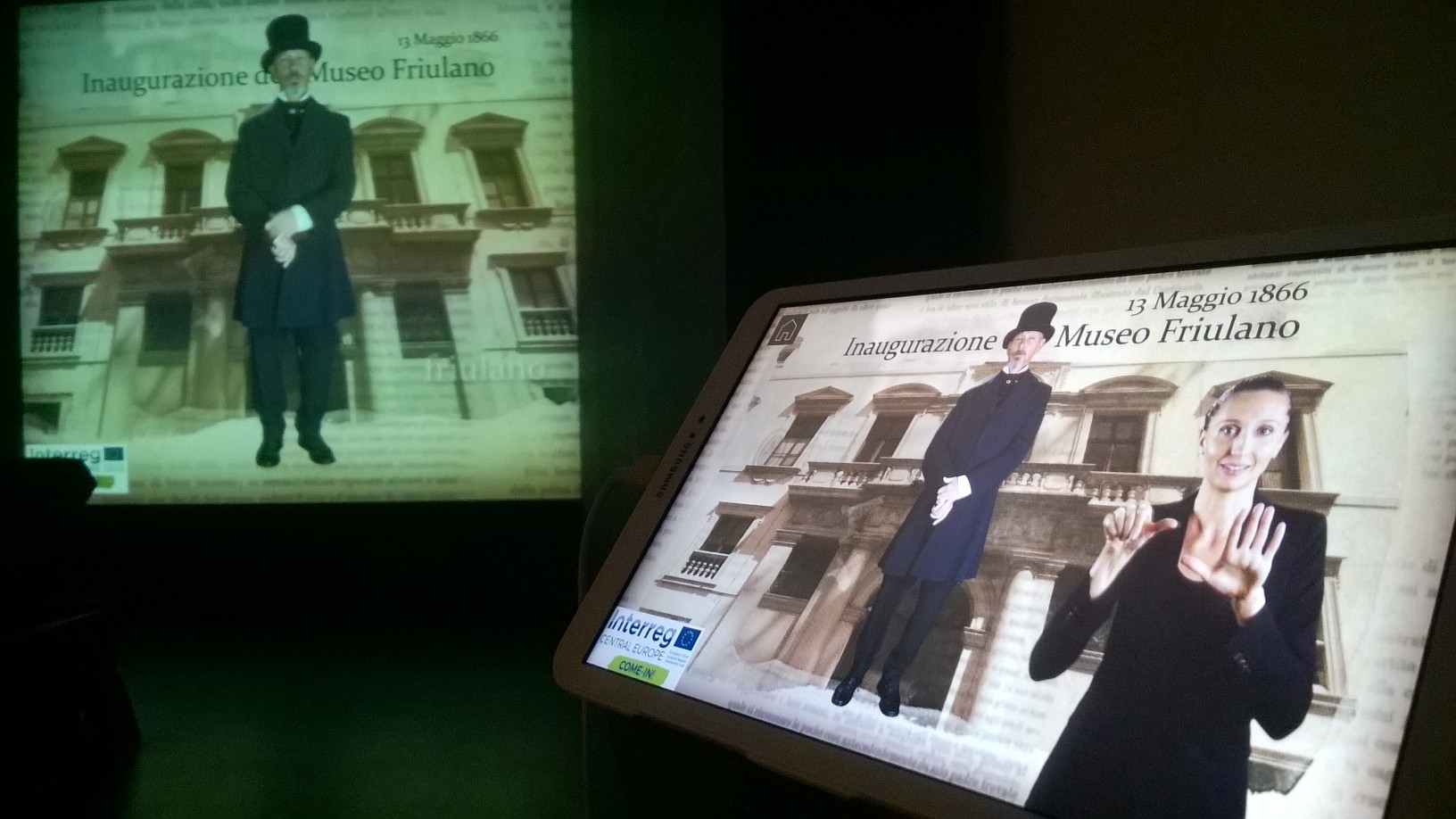
The museum itinerary begins with a video presentation in which an actor plays the part of Francesco di Toppo (1797-1883), a leading member of the Udinese nobility and esteemed collector of archaeological and literary artefacts. In 1866, di Toppo became president of the Commissione archeologica pel Friuli (the Archaeological Commission of Friuli) as well as Honorary Inspector of Aquileia. On his death in 1883 his archaeological collection was donated to the museum. The video takes today’s visitors back in time to 13 April, 1866, the occasion of the grand opening of the Museo Friulano, which included amongst its collections those currently held in the Museo Archeologico.

Sala 1 Introduzione Di Toppo

Itineraries

Room 2.Augusto de Brandis

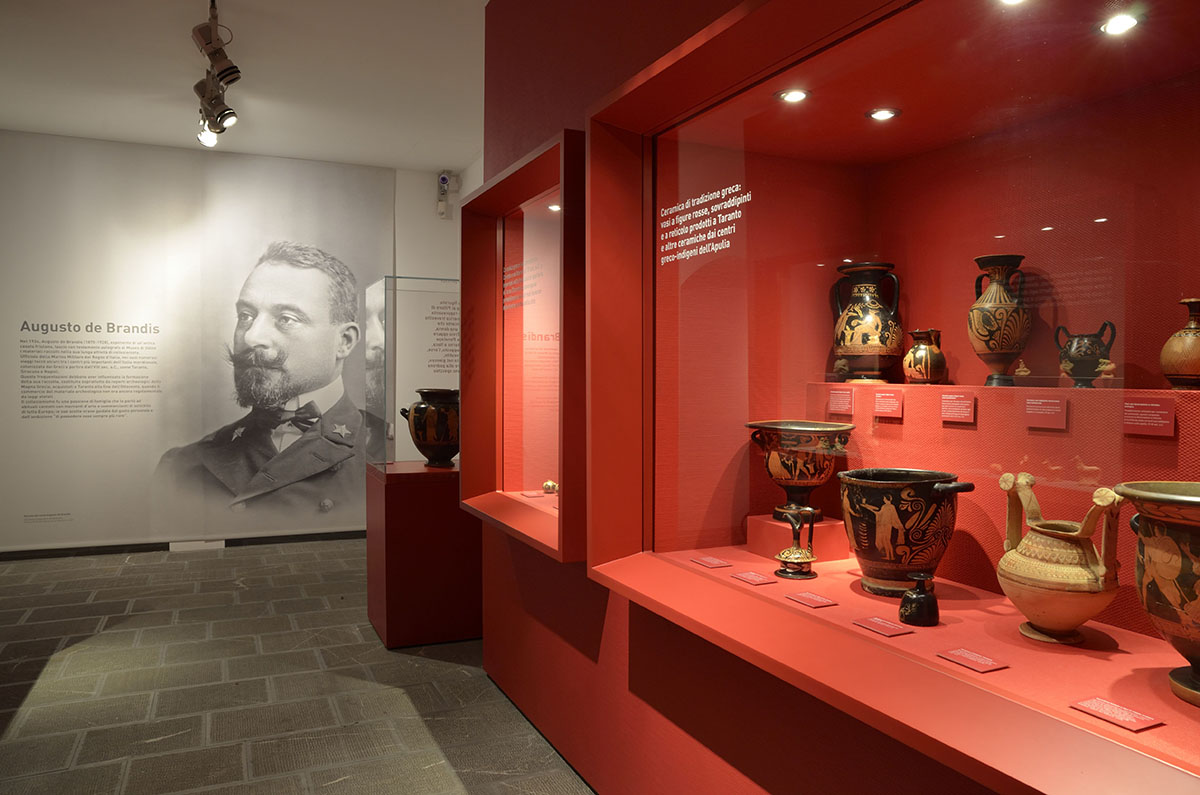
Augusto de Brandis (1870-1928), also a member of an important noble family, bequeathed his impressive collections to the Museum in 1924. These include 400 pieces of pottery dating back to between the seventh and first century BC, as well as a numismatic collection consisting of 6,000 Greek and 8,000 Roman coins. The most important artefact in his collection is a stamnos attributed to the painter Menelaos, an Athenian pottery painter active in the second half of the fifth century BC. The extensive collection of ceramics ranges from vases produced in Corinth and Athens during the seventh century BC, to Magna Grecian and indigenous Greek ceramics. Also of interest is a collection of clay oil lamps (over forty in all) and examples of a particular type of artefact found in the necropolis of Taranto.

Sala Augusto De Brandis

Itineraries

Room 3.Nobles, scholars and religious figures

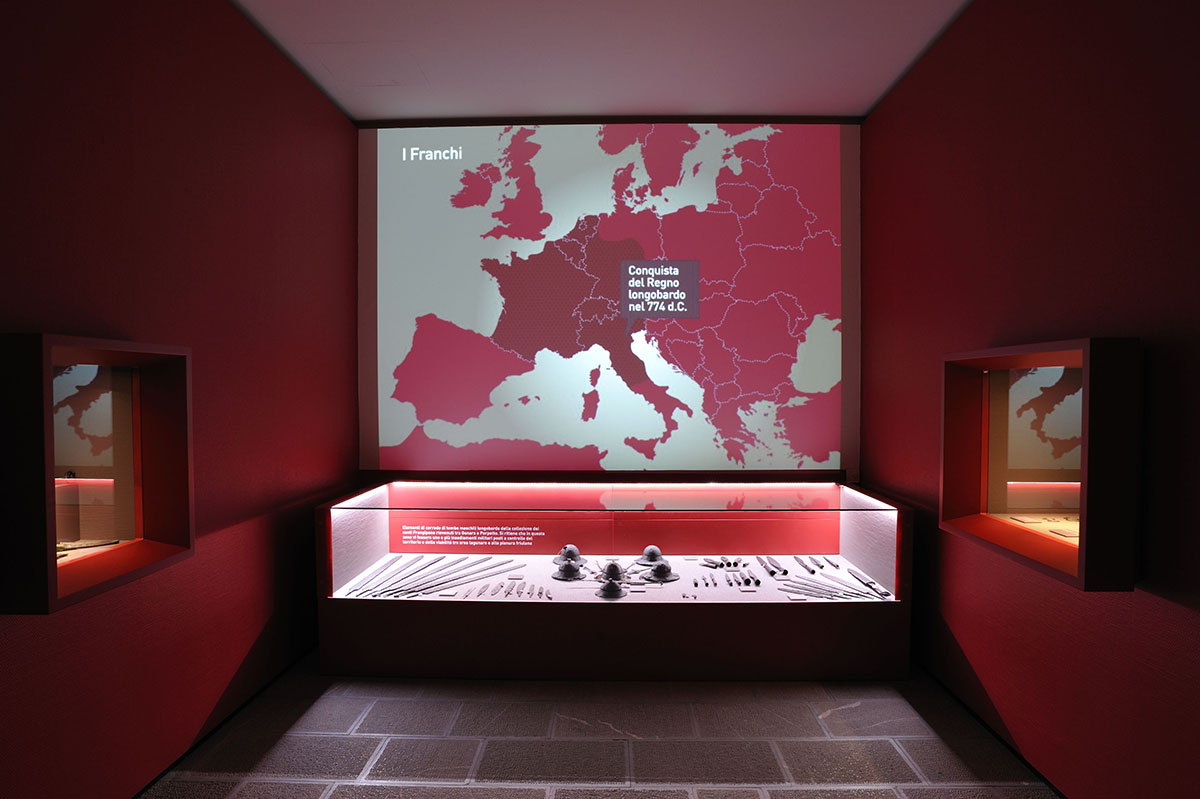
The cultural fervour that led to opening of the Museo Friulano encouraged many nobles, scholars and religious figures to donate their archaeological artefacts to the Institute.  Many of these are of considerable aesthetic and documentary value, among them: protohistoric objects discovered at the site of the necropolis and settlement on Moruzzo hill, which were donated by nobles from the Gropplero family; Roman finds belonging to Countess di Prampero Peretti; and Lombard artefacts from the necropolis of Planis donated by Count Antonino di Prampero. Also of major importance are the Roman era bronze bust of a Maenad, a gift from Giulio Andrea Pirona, and the marble alabaster bust of Serapis, donated by Giuliano Mauroner.

Sala nobili, eruditi e religiosi

Itineraries

Room 4.Francesco di Toppo and the excavations in Aquileia

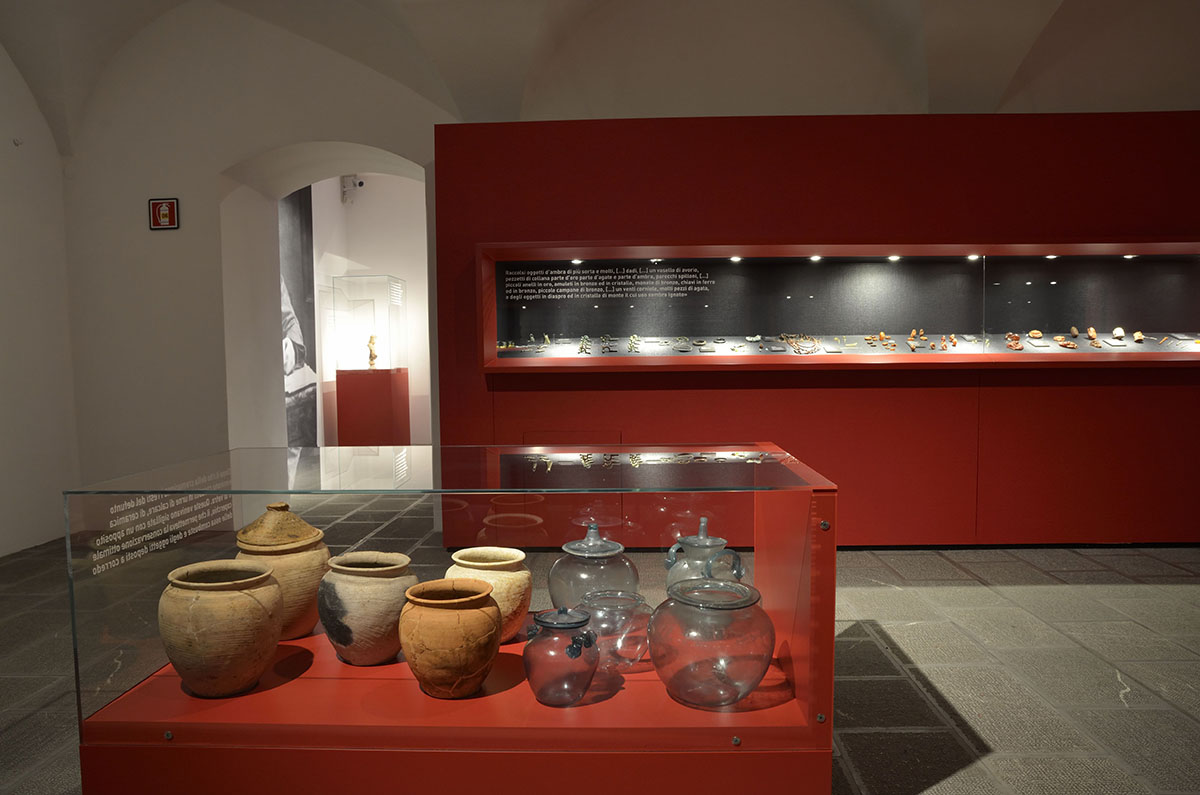
In 1859 Francesco di Toppo began his archaeological research in Aquileia, concentrating predominantly on large burial areas. Of particular note among the various funerary objects discovered are examples of glass and terracotta ointment jars, including a rare rhyton in blown glass dating from the first to the second century AD; eighty lamps; ceramic containers for funeral libations, including a glazed ceramic single-handled jug from the fourth century AD, and a Saint Menas ampoule. Reconstruction of the grave goods has proven difficult, however, on account of the fact that di Toppo arranged his collection by category.

Sala Francesco Di Toppo

Itineraries

Room 5.From Private Collections to Public Museum

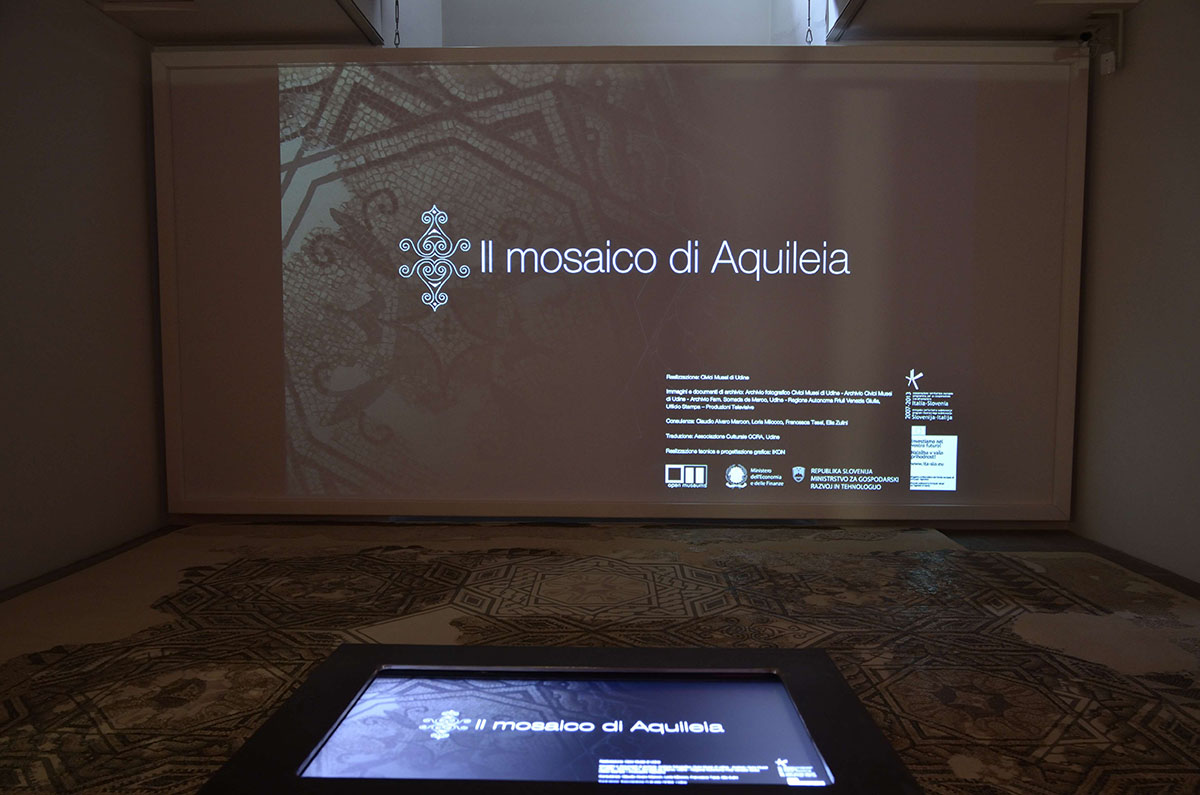
As evidenced by the artefacts displayed in these rooms, the phenomenon of collectionism certainly played a fundamental role in the preservation of our cultural heritage, as it did in the creation of most of our public museums. Today, however, its importance has since passed: indeed, the decontextualization of artefacts can impede the historical reconstruction of archaeological sites on which modern-day research is based. The floor mosaic displayed in this room, which was discovered on Ritter land in Aquileia and added to the public collections in 1933, is a case in point, testifying to the fact that museum acquisitions during the period were largely selected on aesthetic rather than documentary grounds.

Sala Collezionismo

Itineraries

Room 6.Luigi Pio Tessitori

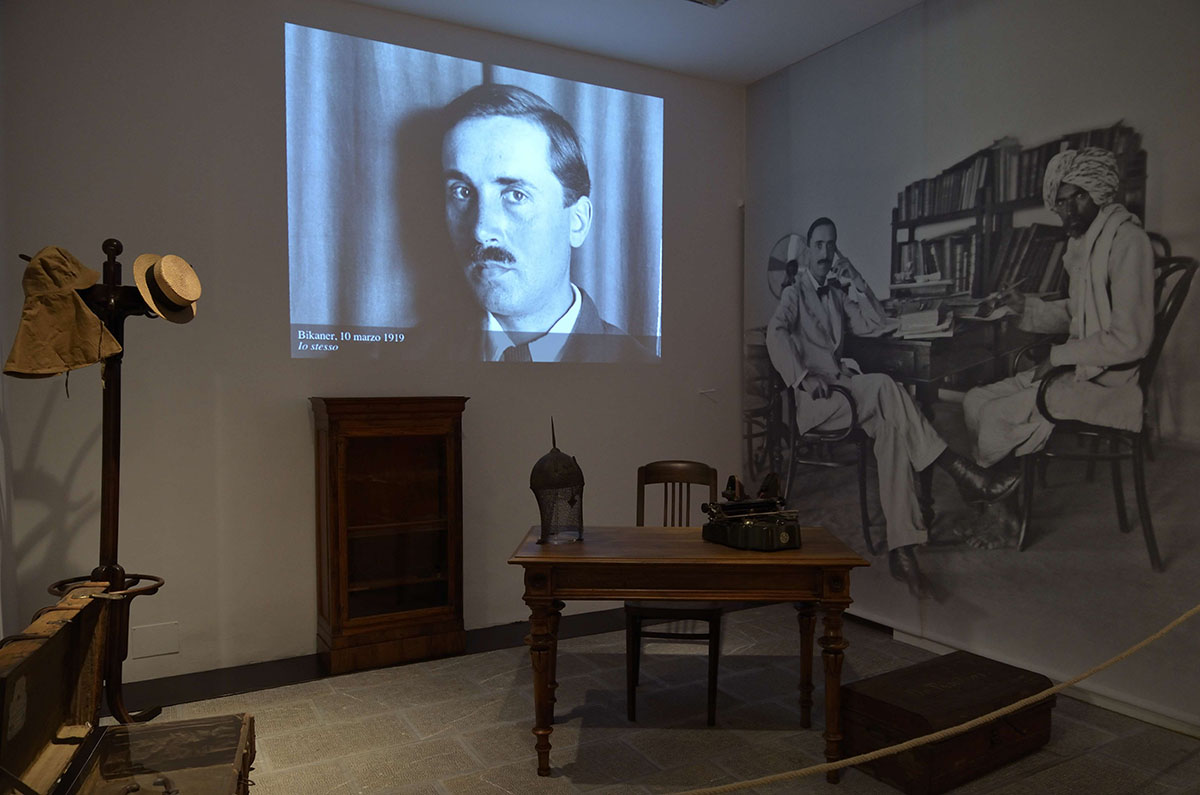
The final room is dedicated to Luigi Pio Tessitori (1887-1919) and archaeological research undertaken in foreign lands. Tessitori, a member of the Friulian nobility, travelled to northern India in 1914 to devote himself to the study of Bardic literature, popular legends and folk traditions. His encounter with Sir John Marshall, Director General of the Archaeological Survey of India, gave him the opportunity to turn his scholarly attention also to archaeology, and in addition to conducting his own research, he was to play a decisive role in the creation of the Archaeological Museum of Bikaner.

Taking inspiration from photographs of his studio in India, the room evocatively displays the objects that belonged to him, including items from his collection of Indian weapons, as well as printed books and manuscripts.

Sala Luigi Pio Tessitori

Itineraries

07.Lapidarium

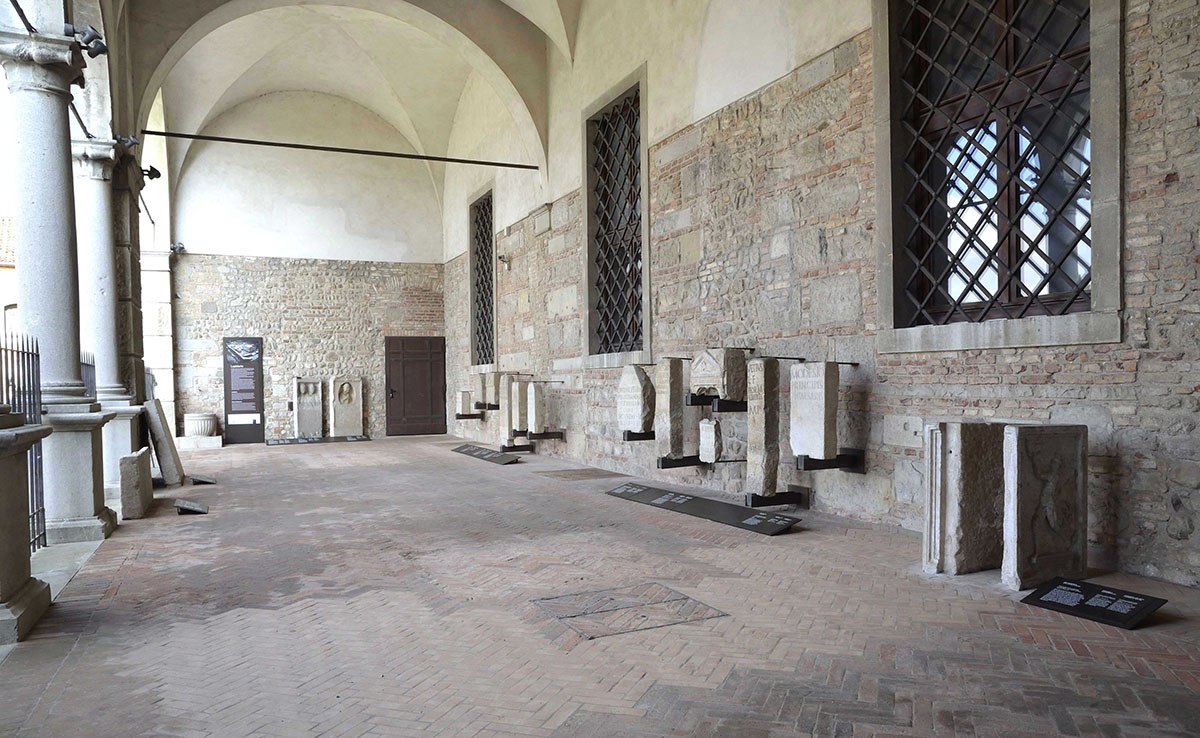
The itinerary continues outside the museum, under the covered walkway of the castle, with the Lapidarium. Here one finds monuments, sculptures and epigraphs of Roman origin, mostly from the collections of two local Counts, Gorgo and the aforementioned di Toppo, who owned land in Aquileia and its surrounds. In addition to these, a number of items that were the result of chance findings or had been re-used in various buildings are also exhibited. As for the thematically divided artefacts on display, these mostly explore necropoleis and ancient road systems.

Lapidario

Itineraries

08.Playroom

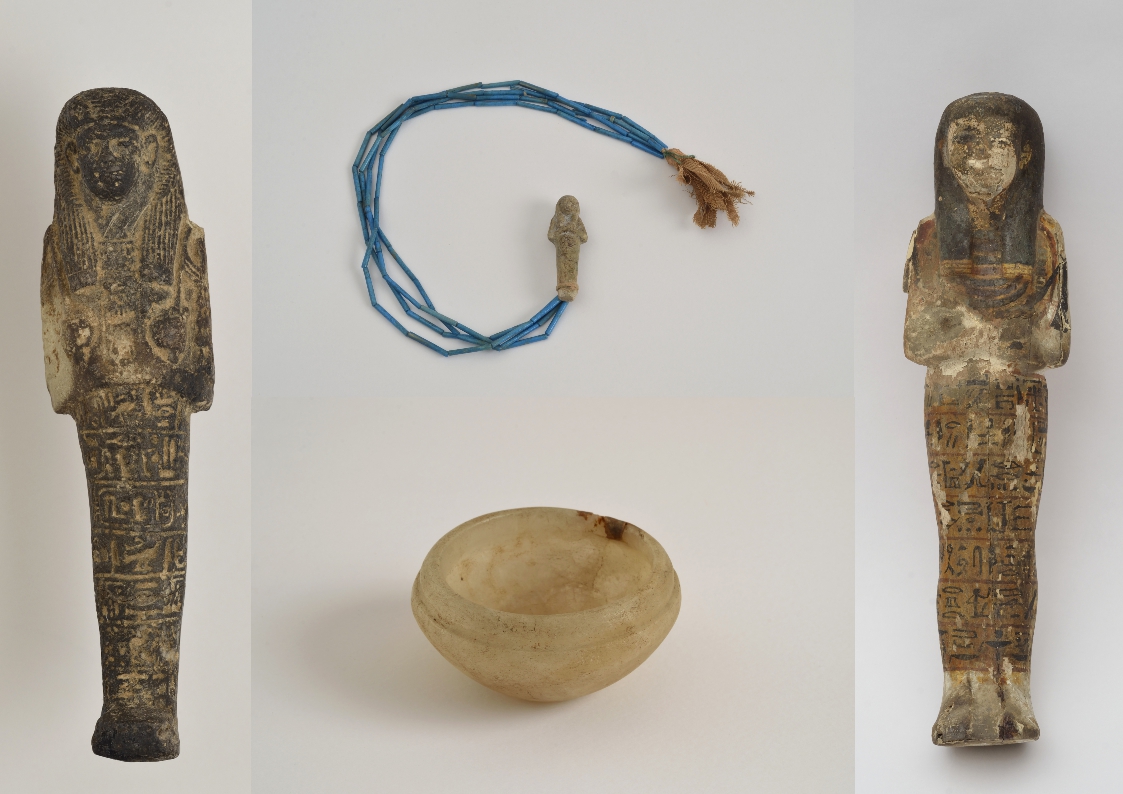
The itinerary of the Archaeological Museum ends with the playroom, which is open to the public and it offers games with which families and young visitors can freely play, even without the presence of museum operators. In the Playroom, children will experience the museum in an unconventional way. The playroom also displays the Egyptian collection of the museum, donated by Riccardo Mattencloit-Ubelli. His aunt, the countess Olga Meraviglia-Crivelli, received those finds as a gift directly from Lord Carnavon, the famous explorer who discovered Tuth-Ank-Amon’s tomb. The batchis not homogeneous, but made of various objects from different parts of Egypt, which in the early 1900s were sold as souvenirs, and sometimes they were even modified to be worn as jewels.

Collage egizi